01Pituitary activation
GHRH receptor
Tesamorelin binds the GHRH receptor on pituitary somatotroph cells. This Gs-coupled receptor raises cyclic AMP, activates protein kinase A, and promotes pulsatile release of growth hormone.

Compound guide
From cellular signaling to what those pathways mean in everyday language.
Overview
Tesamorelin is a stabilized analogue of growth hormone-releasing hormone (GHRH), a peptide signal involved in pituitary growth-hormone release.
Tesamorelin copies growth hormone-releasing hormone, a natural message sent to the pituitary gland. It works upstream by encouraging the body to release growth hormone in pulses and increase downstream IGF-1 signaling.
Inside the body
These receptors, enzymes, and signaling networks form the primary steps connecting this compound with changes inside cells and tissues.
Tesamorelin binds the GHRH receptor on pituitary somatotroph cells. This Gs-coupled receptor raises cyclic AMP, activates protein kinase A, and promotes pulsatile release of growth hormone.
Released growth hormone binds its receptor in the liver and other tissues, activating JAK2 and STAT signaling. The liver then increases production of insulin-like growth factor 1, or IGF-1.
Growth-hormone signaling changes how fat cells store and release lipids, including increased lipolytic signaling. Clinical research with the approved formulation focused on visceral abdominal fat in a specific disease-related setting.
In plain English
The result is a stronger version of the body's own growth-hormone signal rather than a continuous outside supply.
GH and IGF-1 influence tissue growth, nutrient handling, and body composition.
That pathway can reduce visceral fat under the studied conditions without making tesamorelin a general-purpose weight-loss treatment.
Tesamorelin starts a hormone relay. The pituitary releases growth hormone, the liver increases IGF-1, and fat and other tissues change how they handle nutrients. This is a timed endocrine signal rather than a direct supply of growth hormone.
Read the evidence
Continue exploring
More compounds organized within the endocrine & growth factor area.
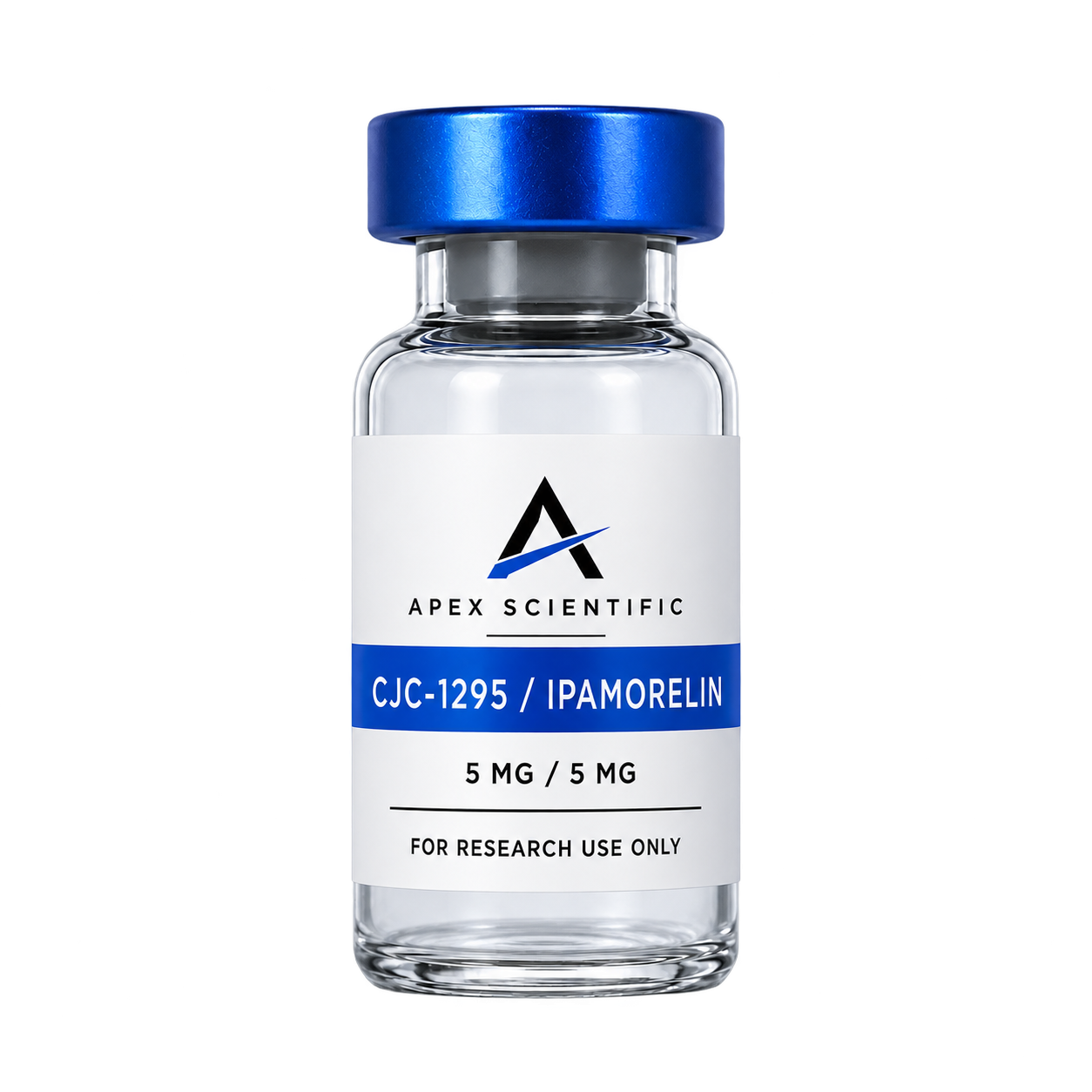
This blend combines CJC-1295, a long-acting GHRH analogue, with ipamorelin, a growth-hormone secretagogue that acts through the ghrelin receptor pathway.
Open compound guide ↗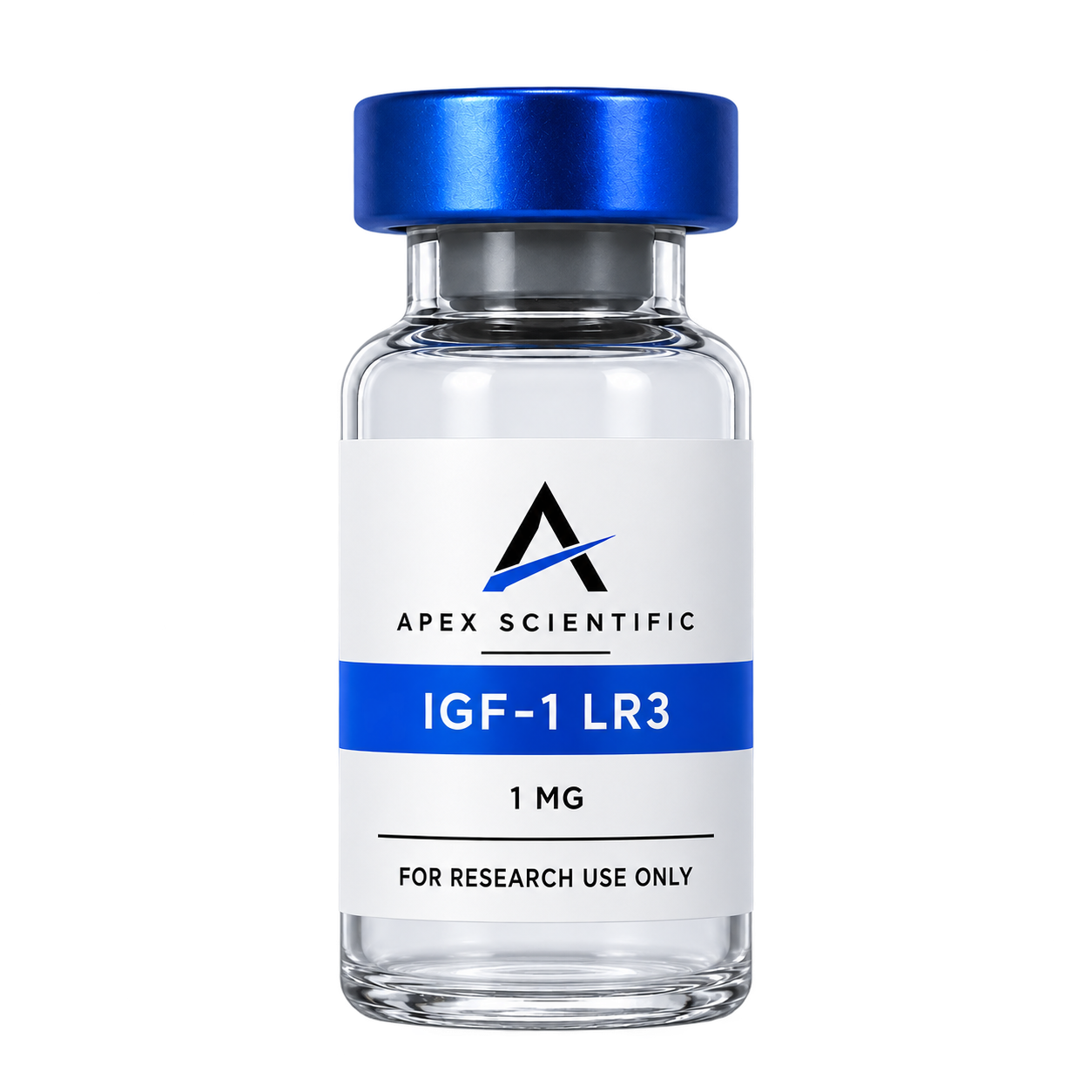
IGF-1 LR3 is an 83-amino-acid analogue of insulin-like growth factor 1 engineered to retain IGF-1 receptor activity while binding less strongly to IGF-binding proteins.
Open compound guide ↗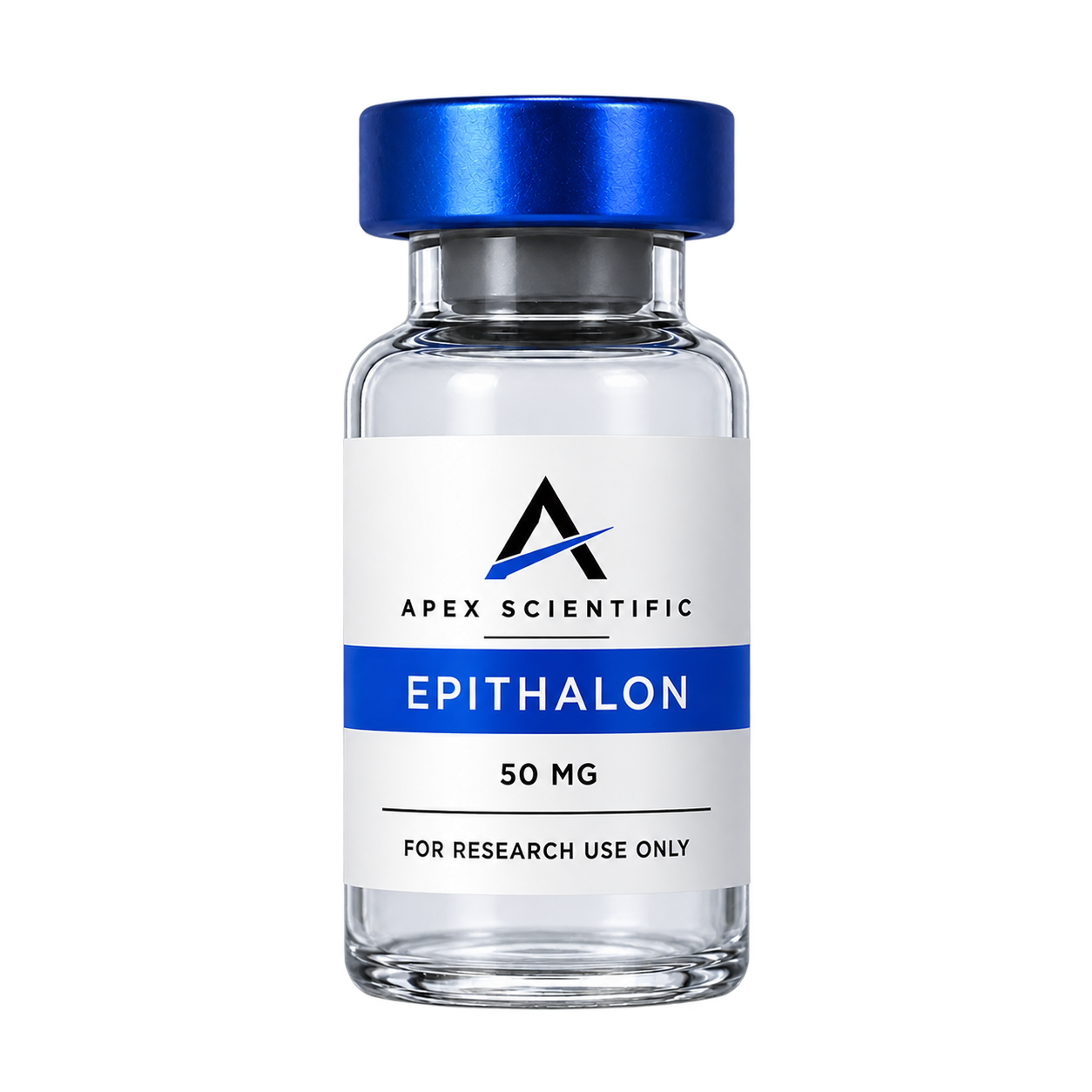
Epithalon, also spelled epitalon, is the tetrapeptide Ala-Glu-Asp-Gly developed from research on pineal peptide extracts.
Open compound guide ↗One important note
Controlled human findings come from a defined tesamorelin medicine studied in adults with HIV-associated lipodystrophy. Those results should be read within that formulation and population.
This guide explains cellular mechanisms and published outcomes in everyday language. It is educational information, not medical advice or instructions for personal use. Products offered on this site are intended exclusively for laboratory research and are not for human or veterinary use.