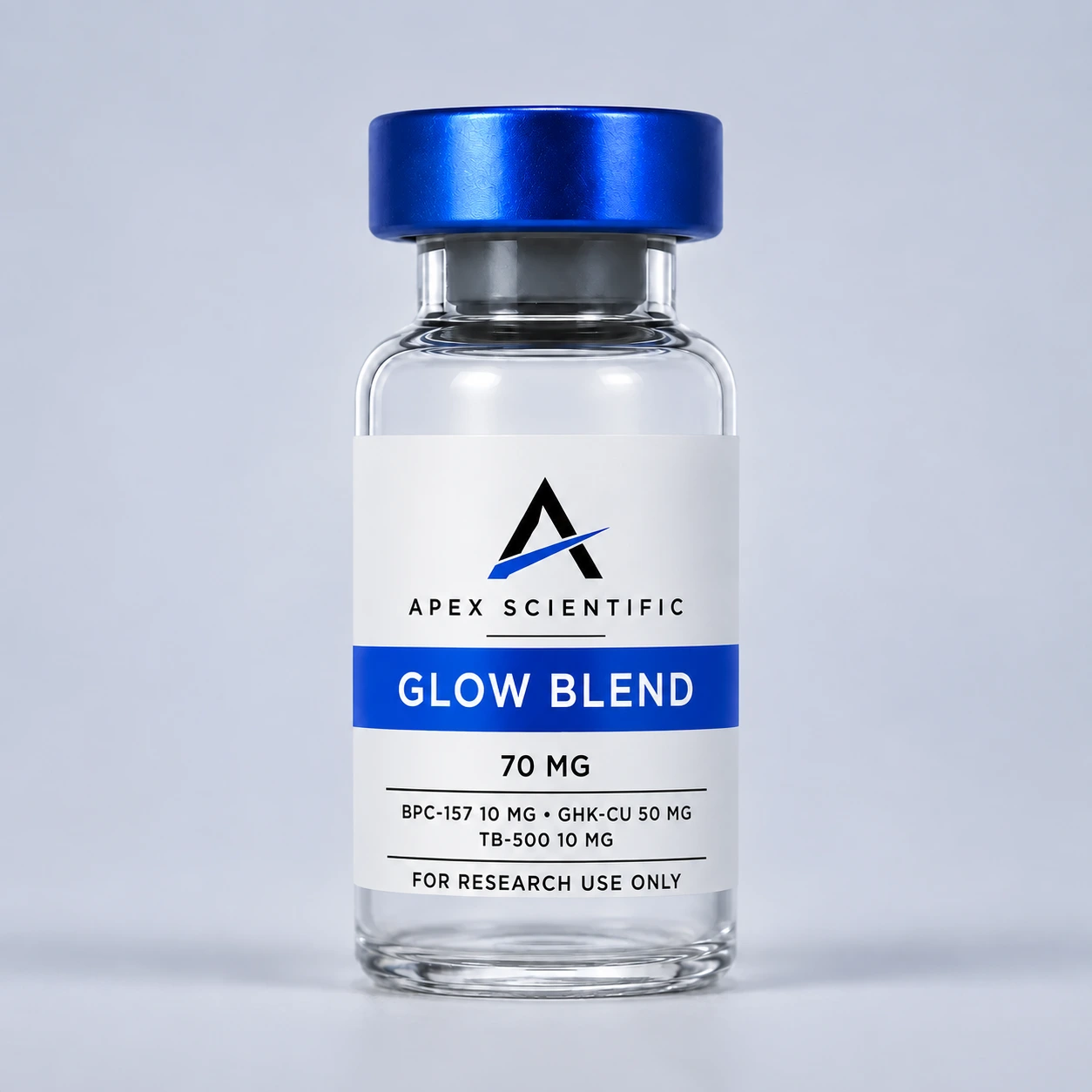
01Vascular + tissue response
BPC-157 research pathways
Preclinical BPC-157 studies examine nitric-oxide signaling, vascular responses, inflammatory markers, and tissue-response models without a firmly established direct molecular target.

Compound guide
A pathway-focused guide to molecular mechanisms, published evidence, and the limits of interpretation.
Overview
GLOW BLEND is a fixed research mixture containing nominal amounts of BPC-157, GHK-Cu, and a TB-500 reference associated with thymosin beta-4 biology.
The components are studied through different systems: BPC-157 in vascular and tissue-response models, GHK-Cu in copper-peptide and extracellular-matrix signaling, and thymosin beta-4 in actin dynamics and cell migration.
Component-level findings do not establish the behavior, safety, or efficacy of the fixed blend. The cited literature does not include a controlled human outcomes trial of this exact combination.
Research model
These receptors, enzymes, and signaling networks define the primary laboratory questions associated with this research material.
Preclinical BPC-157 studies examine nitric-oxide signaling, vascular responses, inflammatory markers, and tissue-response models without a firmly established direct molecular target.
GHK-Cu studies examine copper-dependent enzymes, fibroblast behavior, extracellular-matrix turnover, collagen-related pathways, and movement of cells in laboratory or formulation-specific models.
Thymosin beta-4 binds monomeric actin and helps regulate filament assembly, a process involved in cell shape and migration. TB-500 labeling is treated here as a thymosin beta-4 reference identity.
Research interpretation
Preclinical BPC-157 studies examine nitric-oxide signaling, vascular responses, inflammatory markers, and tissue-response models without a firmly established direct molecular target.
GHK-Cu studies examine copper-dependent enzymes, fibroblast behavior, extracellular-matrix turnover, collagen-related pathways, and movement of cells in laboratory or formulation-specific models.
Thymosin beta-4 binds monomeric actin and helps regulate filament assembly, a process involved in cell shape and migration.
Component-level findings do not establish the behavior, safety, or efficacy of the fixed blend. The cited literature does not include a controlled human outcomes trial of this exact combination.
Read the evidence
Continue exploring
More compounds organized within the cellular response research area.
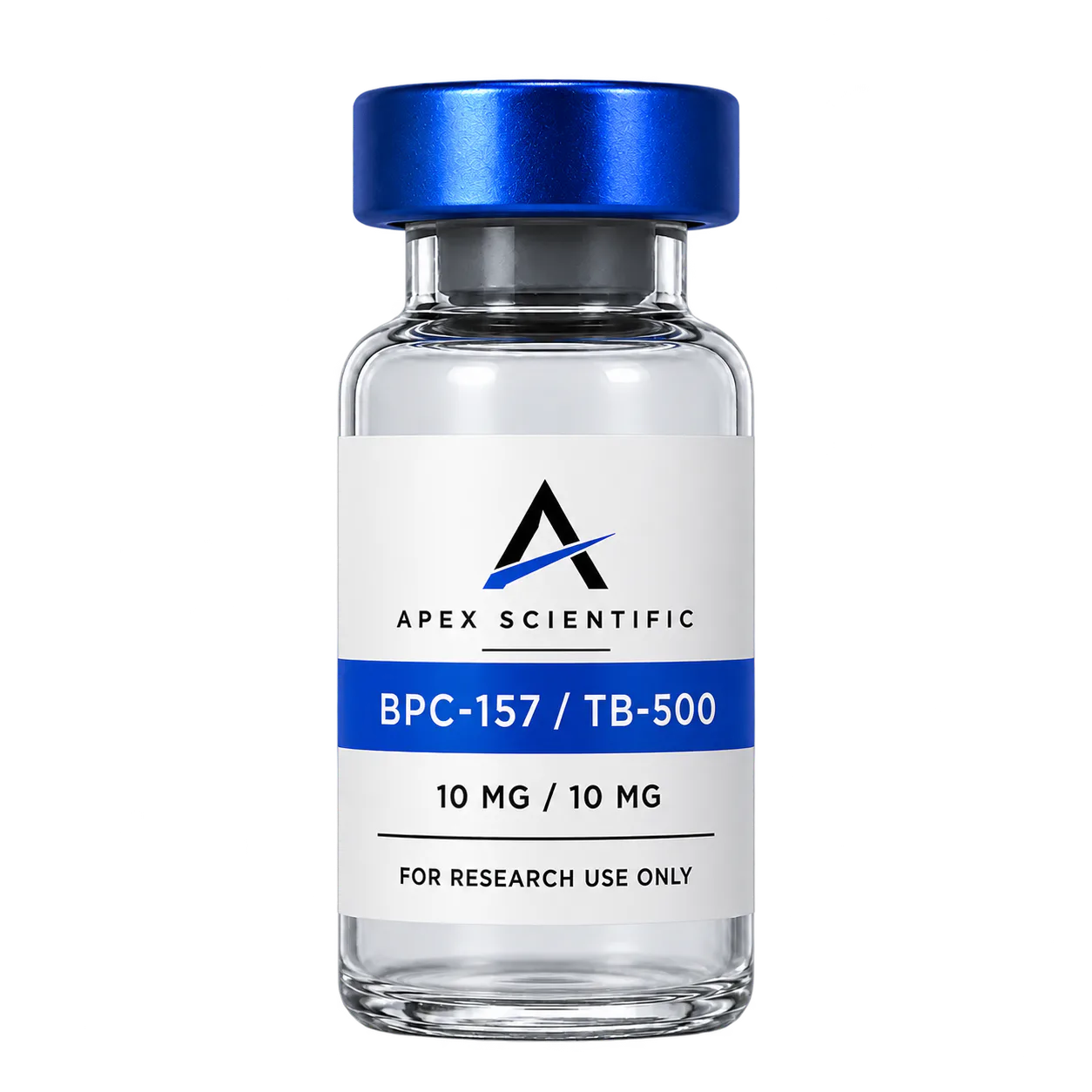
This research blend pairs BPC-157, a synthetic 15-amino-acid peptide, with a thymosin beta-4 reference commonly labeled TB-500.
Open compound guide ↗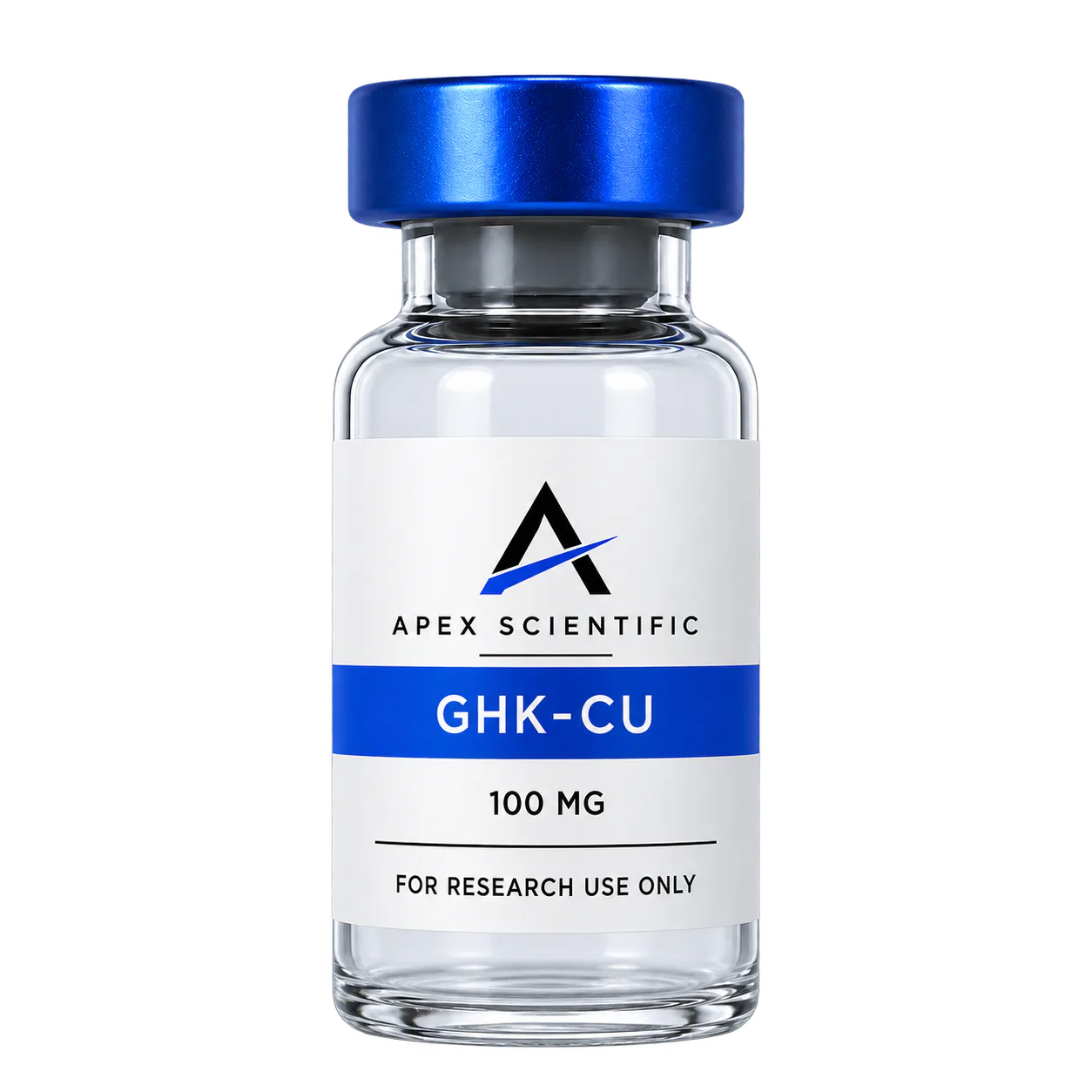
GHK-Cu is a copper complex of the naturally occurring tripeptide glycyl-L-histidyl-L-lysine.
Open compound guide ↗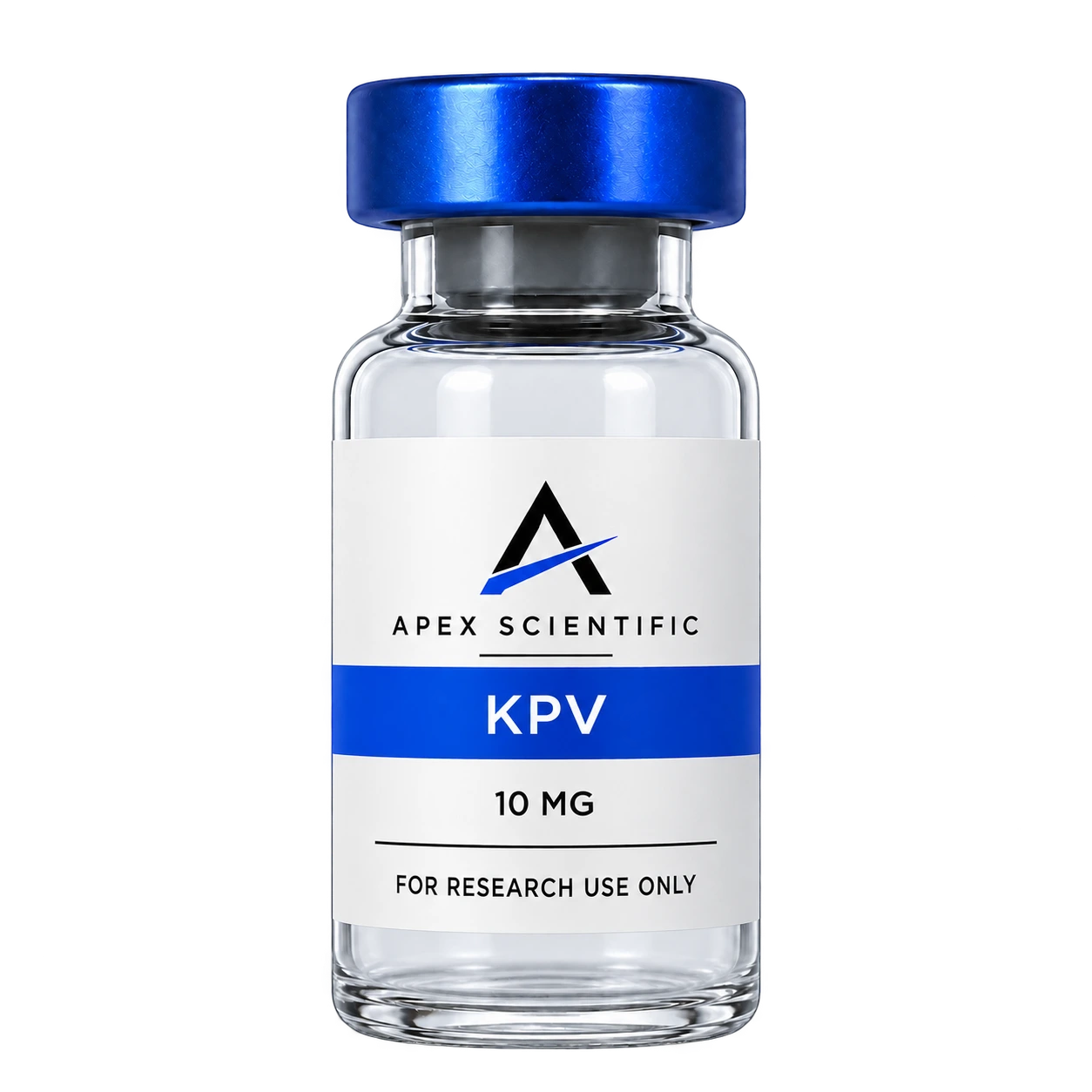
KPV is the three-amino-acid sequence lysine-proline-valine, corresponding to the C-terminal 11–13 fragment of alpha-melanocyte-stimulating hormone.
Open compound guide ↗One important note
The exact three-component blend has not been evaluated in controlled human outcome trials. Findings from individual components cannot be added together to predict the blend's behavior.
This guide summarizes molecular mechanisms, published evidence, and evidence limits in everyday language. It is educational information, not medical advice or instructions for personal use. Products offered on this site are intended exclusively for laboratory research and are not for human or veterinary use.